Monday, February 24, 2020

Welches and Wood Chips Feb 2020

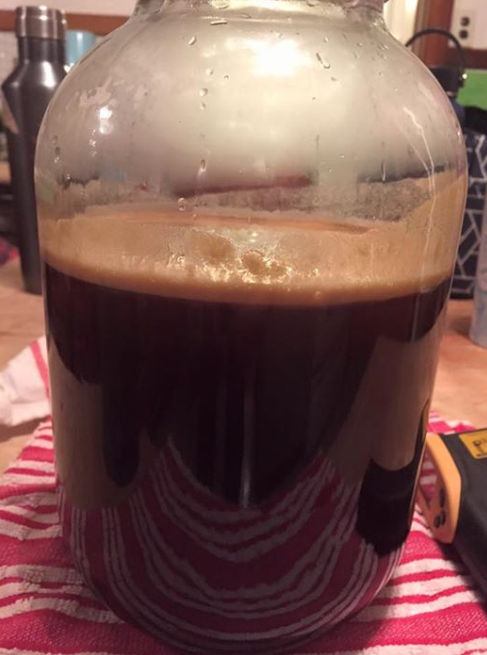
I'd heard of using wood chips to flavor wine and heard that it works best with red wine.  So I made a simple batch of welches wine.  I used 3 cans of concentrate to make a gallon of wine.  After the fermentation mostly stopped I boiled some hickory chips (only ones I had) to make sure any natural weird yeasts were gone.  I actually didn't like doing this step because I could see a lot of flavor going down the drain when I poured off the water.

I racked the wine off of the lees and it tastes pretty good as is.  I put three small handfuls of chips.  I'm checking every 2 days for taste.  This morning after 2 days It tastes great.  I didn't taste wood but I do taste something different.  Kind of exciting and interesting.

2/28 - So then I got the flu and it sat a few more days.  I guess it's been 6 days.  I'm tasting something, it tastes good but I wouldn't define it as woody.  It does have a more mellow taste, quite good actually.  Still waiting until I taste hickory or it starts to go south before I end the experiment.

3/4/2020 - Ended the experiment last night.  Put the wine in a half gallon bottle and shared the remaining with Mary B.  Very tasty.  I think the wood mellowed the wine some.  I don't really taste any wood flavor.  the chips were very red so they absorbed something.  I felt like the alcohol content was pretty weak, weaker than when I started.  Can't prove it but there it is.

I think next time I'll make it stronger and will be sure to take some readings.  I'm putting the half gallon away for a while to see how it changes.

May 20 - Cleaned up the wine storage area and found this.  Decided to have some and ended up "sharing" the remaining half gallon with Mary B.  It aged really nicely and wow, what a kick.  Almost too strong (said no one ever).

Tuesday, February 18, 2020

Pumpkin Feb 2020

February 17, 2020

Looking back through my blog I see that this is the 4th time I've made this wine.  I wanted to go bigger so I took a 6 gallon ale bucket that my friend Dave Fraticelli gave me and made a batch in there.  I reviewed all of my old notes and pretty much went the same rout with a couple notable differences.

Ingredients:
  • 6 lbs canned pumpkin
  • 10 cups sugar
  • 4 lbs honey
  • pectin enzyme
  • yeast nutrient
  • same spices as the original recipe
The last time I made this I noted that I didn't boil the pumpkin.  I changed that this time for no special reason.  The last batch tasted fine but something told me that boiling would be better.  So I took 2 big pots and filled 2/3 full with pumpkin and water.  I boiled for about 20 mins.  After it cooled a little (probably not enough but I get impatient) I poured them into the bucket and added water to top it up.  This is probably a mistake because if it foams up I'll probably have a mess to deal with :-).  I added the sugar, honey, pectin, and yeast nutrient and mixed it well.  It was still too hot to add the yeast so I waited overnight to do that.

We'll wait until I rack it the first time before we add the spices.  This will have the benefit of tasting the spices with the wine but will make it so the spices are not in the pulp.  So it's a trade off but that's what experimentation is for.

BTW - love the little digital scale I got for Christmas.  It made measuring out the honey very easy.

2/28/2020 - My ale pail doesn't have a good seal so I can't watch the bubbles but I popped the top yesterday and it looks like it is still bubbling.  I might give it a stir just to be sure in a few days.  No need to rush to the first racking.

4/8/2020 - A lot has happened in the past few months.  The COVID virus happened so everyone is on home lockdown.  Schools closed, I'm teleworking, getting tons done around the house.  Fiona will graduate early but possibly without a ceremony.  On the wine tip I racked the wine and squeezed out the mash.  It's kind of incredible how dry you can get it!  It's in the freezer to make pumpkin bread.  Also, I put a couple of pints in a small jug and noticed the spent yeast at the bottom and got an idea.  I siphoned the yeast and fed it some sugar and yeast nutrient and it came back to life, bubbles!  Then Mary B made bread from it.  We've made 2 loaves and the second was better than the first.  We're keeping the barm in the frigde and it seems very happy.  Making another loaf today for Easter.

So, after racking the wine I let it sit to clear out.  Some more pulp sank to the bottom and got some weird white stuff in it.  I think I remember this happening before.  Last night I racked it again.  I think the white stuff was just spent yeast.  Everything tasted fine.  So we spiced it and now it's sitting to clarify some more before I bottle it.  We went heavy on the spices this time and I really liked it.  For some reason I feel like the alcohol content is lower.  Not bad and still very tasty. 

Spices:

  • Ginger - 3" root
  • Nutmeg - 1 nut
  • Clove - 1 tbsp
  • Cinnamon - 2 tbsp
  • Allspice - 5 berries

This is what it looks like today 4/8/2020.


Thursday, January 16, 2020

Vanilla Lavender Bochet Jan 2020

I saw a bochet on a facebook post and looked up what it mean.  Bochet (Boh shett) is a mead where you boil the honey first to caramelize it and deepen the flavor.  I wanted to try some of my new Christmas toys and I had some honey so I thought, why not!  I asked Mary B for suggestions for flavor and she decided vanilla lavender would be nice.  And so it began...

I measured exactly 3 lbs of honey and put it on the stove and heated it slowly.  Since we have an electric stove I had to be really careful to not let it burn.  I used an infrared thermometer to monitor the progress as I stirred; I stirred a lot!  At over 240º it was boiling.  I turned the heat back to where it would boil but not super rapidly and boiled it for about 20 minutes.  Then took it off and let it cool.

I used a clean 12lb (1 gallon) honey jar and poured the warm honey in and filed the rest with water.  I wanted to try a math experiment that I thought up.  A gallon of liquid sugar weighs 11 lbs.  A gallon of alcohol weighs 6.6 lbs.  Water weighs 8 lbs per gallon.  Alcohol weighs 60% of the weight of sugar.  So I thought that maybe I could use the weight difference between starting and ending to determine how much sugar was converted into alcohol.  I made an assumption that no water will evaporate.  I know that strictly-speaking that's not true but I'm working with rough estimates for fun.  A true experiment would have a non-fermenting control but what fun would that be?

So here are the starting numbers:
3 lb Honey
8 tbsp Vanilla
1 tsp lavender
Water

Jan 7 2020
SG 1.100  25% sugar
Total weight  10lb  7.2oz

Jan 15
9lb  13oz
1.042 7% sugar

So here's my math experiment.  Convert weight to decimal:
10.45 lb
9.8125 lb

Difference:  0.6375  More than half a pound.  That's impressive.  So, if I didn't know the starting amount of sugar and I just wanted to know how much alcohol has been created I should be able to determine that by the amount of weight lost.

I started with 3lb of honey.  If it all converted to alcohol the final weight should be 60% of that or 1.8 lbs.  that's a difference of 1.2 lbs.  Does the math work out?  A difference of 4.4 lbs is one gallon of alcohol.  1.2lbs is .27 gallons of alcohol.  That's close to the original sugar reading.  When the conversion happens you end up with 60% less volume as well.  So you have to take that into consideration so you get 16.2% alcohol.

So, using what I learned above I should have converted 0.1448 gallons of alcohol which reduced for volume is 8.5% alcohol.  That's seems about right.  So this means I can use a difference in weight to determine the ABV.  Fun stuff.

So after all of that, all I really care about is the taste.  I swapped out jars to take it off of the old yeast and had a taste.  It's very tasty.  It has a sweet front with a bitter after taste that I like.  I think the bitter is the lavender, Mary B thinks it's the caramelization.  I took some new numbers when I racked it (listed above).  Since I used KV1116 yeast which maxes out at 18% alcohol this will probably finish dry but we can either drink it before that time or see how it tastes when dry.  Either way I think it will be very good.

Drank it, loved it.  Had a half quart left over that I let sit for a month to see how clear it would get.  It cleared nicely and was oh so tasty. And, alas, it is gone.  I'll have to make this again sometime.

Skål!


Thursday, January 2, 2020

Jalepeno Mead January 2020

Jan 2 2020

Since this is such a favorite and has few ingredients I'm making a large batch this time.  My first ever 6 gallon batch.  3.3 lbs of honey per gallon and a few big jalepenos.

I put about 4 gallons of water in the jug and added 7 lbs of honey.  I used my new scale to measure it.  I started with this amount because I didn't want to overwhelm the yeast.  The full amount of honey comes out to about 27% honey.

I poured out about a half gallon of the mixture into a warm bath and pitched the yeast so that it would have a nice warm start.  This also gave the 4 gallons of water a little time to warm up from 60º tap temps.  Once the yeast was bubbling I put it in the jug.  As of this morning it's bubbling.  I'll watch the gravity and when it gets low I'll put in the remaining 13 pounds of honey and water.  I'll also put in the sliced peppers once I'm sure the yeast is going nicely.

2 Weeks Later or so (I forgot to write it down) I added the remaining honey and peppers.

February 22 - While Mary B and Fiona were away and dance camp NYC I racked the mead off of the lees.  It tastes wonderful already!  Most of the fermentation has stopped.  I put  cling wrap over the top and a rubber band.  It's sitting quietly and settling.


Monday, December 30, 2019

New Year 2020 Orange Spice Mead

December 27 2019 - I wanted to make something to drink to ring in the new year so I threw this together.

7 lbs honey
2 large oranges sliced
Cinnamon sticks
Cloves
Nutmeg
Star Anise

Boiled the water, oranges, and spices to soften and release flavors.  Poured into my 2 gallon jug, waited for it to cool a little, and added the honey and yeast (116).  It started off a little slow so I added some yeast nutrient.  That seemed to do the trick.

My hope is that by New Year's Eve it will be slightly fermented, bubbly, and tasty.  It smells delicious.

Happy New Year 2020!
Drank this on new year's.  Boy, what a kick.  I don't know if it's the amount of honey or the bubbles or the yeast but it almost knocked me over.  It was very smooth so I did drink a lot of it.  There was a gallon left over that Mary B and I had with dinner the next day.  We'll probably finish it off over the weekend.

Skall!

Wednesday, November 20, 2019

Sweet Potato Wine Fall 2019

Mary B and I recently cracked open a bottle of the potato wine that I made last year.  We had it with a meal and it was very, very good.  Beautiful color and the taste was great.  You could taste the earthy quality from the potatoes and a hint of the bananas.

After looking up some recipes on the web and finding some really weird ones (like 50 lbs of potatoes?) I decided to just wing it based on what I've learned so far on this adventure.  Mary B picked up a basket of sweet potatoes.  I have no idea how many pounds.  I'd estimate 20 potatoes or more.  I peeled them like most of the recipes said to do.  Sweet potato skins aren't poison or anything but I figured those who came before might know more than I.

After peeling I chopped them into small cubes.  Sweet potatoes are hard!  I had to wrap a towel around my hand by the end of the chopping.  I recall thinking that if this doesn't turn out to be amazing the work will not be worth it.

After chopping I put them into 2 large pots of water to boil... and boil they did.  I don't recall the actual cooking time.  I think I used the method of checking to see if the potatoes were soft.  I boiled and simmered for at least 3 hours though, maybe more.  I turned them off and let them sit covered in the water until the next morning, November 9, 2019.

I put the water into my 3 gallon jug and checked the gravity.  The gravity could have been put off by the sediment but it showed around 7%.  This is pretty weak so I added 4 lbs of sugar.  I figured this would bring it up to around 18% ish resulting in a 9% wine.  I chopped 2 very-ripe  bananas and threw them and the skins into the jug with the yeast.  As seen in the image below I put a cloth over the top.  It was bubbling pretty well after 24 hours.

A note about the remaining mash, I put the leavings in a gallon zip lock bag and put it in the fridge.  We'll probably make bread using it.

I kept it with just the cloth for more than a week.  November 19 thhe fermenting was slowing down a bit.  I took the skins out and put an airlock on.  I also added about 2 lbs more sugar.  As of this morning it is very active again so I guess the yeast are happy.  Now to let it finish bubbling and transfer to get it off of the old yeast and bananas.

About the second week of December i took it off the Lee's and everything. It cleared very quickly and the fermentation stopped.  After Christmas i bottled it and had a taste.  Heavenly.  I think the alcohol content is lower than other wines I've made by Mary B says no. It turned out to be very pretty. Can't wait to see how some aging treats it.


Friday, September 20, 2019

Cantaloupe Wine September 2019


I love summer cantaloupe so I gave this a shot.  I didn't look up anything, I just wanted to see how it would turn out.  I scraped and mashed 2 big cantaloupes.  I wanted to try wild yeast so I added a couple grapes and raisins and kept it in a wide bowl for a few days stirring at least once a day.  I saw bubbles so I put it into a 2 gallon jug after a few days.  I tested the gravity and it was a little weak so I added about 3 cups of sugar.

It bubbled very weakly in the jug.  After 2 weeks total time I noticed some mold on the top of the mash so I racked it to a gallon jug.  I checked after an overnight and there wasn't much happening.  The juice itself has a bit of a vinegar taste which has me a little worried but that may change with time.  I added some wine yeast and yeast nutrient to kick start the batch.  Maybe it will overpower the vinegar taste.

I drank a glass that wouldn't fit into the gallon jug.  No bad effects.  A little like drinking cantaloupe kombucha.  I added a splash of yeast since the wild yeast wasn't doing anything.  It's bubbling away now with an airlock.  It will be an interesting experiment.

October 9 2019 - It's still bubbling but a bit more slowly and is completely opaque.  I'm being patient but I'm interested to know what's happening in there.  The color has changed too.  Hopefully I'm not making a biological weapon :-)

The final thought:  This turned out badly.  I don't know if it got some weird yeast in it or if cantaloupe is just no good to make wine from.  Thus far it's the only batch that I've poured down the drain.  It had a rancid-vinegar taste to it.  No bueno.  :-)